Wednesday, July 16, 2008
Seafood to avoid and to prefer! (Natural News)
Seafood To Avoid
* Sake (Salmon) - Salmo salar (Salmonidae)

While salmon is the most popular item at sushi restaurants, it is most likely farm raised salmon. Farm raised fish such as salmon and tilapia should be avoided as the fish are raised in crowded, often contaminated waters and fed an unnatural diet. Farm raised salmon is not pink but rather a grayish brown, so they are fed artificial colors to dye their own flesh. I'm sure they would just spray paint them if they could. The finer restaurants will serve wild salmon, however in 2008 the pacific northwest of the U.S. experienced a major shortage in salmon so there is a fishing ban and effectively a moratorium on consuming wild salmon. These are also threatened with the possibility that genetically modified salmon (brought to us by caring people who only want to feed African children) will escape. It has been estimated that just a few GM fish escaping would devastate the whole wild population. It's sad what has happened to the wild salmon which is one of the healthiest fish, loaded with Omega-3 fatty acids.
* Maguro (Blue Fin Tuna) - Thunnus maccoyii (Scombridae)

While healthy tuna is one of the best sources of quality protein and Omega-3, it is hard to come by. Tuna is one of the largest fish and thus is at the top of the food chain where it accumulates higher concentrations of mercury, a dangerous heavy metal. A study in Chicago in 2006 found that 1 in 7 tuna samples had dangerously high levels. Bluefin tuna, the most popular and expensive at sushi restaurants is an endangered species. Choose Abalone instead.
* Saba (Japanese Spanish Mackerel) - Scomberomorus niphonius (Scombridae)

Due to high mercury content, mackerel should be avoided. Mackerel spoils easily and is the only salt-cured form of sushi. Mackerel contains more oil which gives it a fishier smell and taste, and for this reason it is often used as bait for other fish . Oily fish will trap more PCBs and toxins in the flesh. This is unfortunate as mackerel in its normal form was high in Omega-3 and offered extremely beneficial oils. Unless you get fish with measurable low mercury content, avoid this one.
* Tai (Red Snapper) - Lutjanus campechanus (Lutjanidae)

Snapper contains lots of B Vitamins along with Selenium, Potassium, Phosphorous and Protein, Red Snapper is normally not farm raised and contains low levels of mercury, and it is high in Omega-3. However this otherwise healthy seafood from the Gulf of Mexico is being massively over-fished.
_______________________________________________________________
Seafood To Prefer
* Hamachi (Yellowtail) - Seriola lalandi (Carangidae)

Yellowtail covers a wide range of fish, but the key is to make certain it is not farm raised. Wild yellowtail is a good choice for a fish that is sustainably harvested and that contains low mercury. A premium species is from Hawaii and called Seriola rivoliana. This is one of the healthiest fish and is among the highest in Omega-3 content. It is free from PCBs (polychlorinated biphenyls) and has no detectable mercury.
* Kani (Soft-shell Crab) - Callinectes sapidus (Portunidae)
Crab meat contains Protein, Selenium, Magnesium, Vitamin B6 and Folate. Soft-shell crabs are a great food to buy live, and since you should not purchase (or eat) dead crabs, I do not recommend eating them at any restaurant that does not purchase them alive. Crabs are normally low in mercury and high in nutrition. Though high in cholesterol, crab meat is also high in Omega-3, and low in fat.
* Ebi (Raw Sweet Shrimp) - Penaeus vannamei (Crangonidae)

Shrimp contains high levels of Protein, Omega-3, EPA and DHA. Smaller fish, like shrimp, tend to be low in mercury. If you've never tried raw shrimp you'll find it to be a completely unique experience from cooked shrimp. This expensive sushi item is often served alongside the fried shrimp carcass in tempura batter.
* Tobiko (Flying Fish Roe ) - Cheilopogon agoo (Exocoetidae)
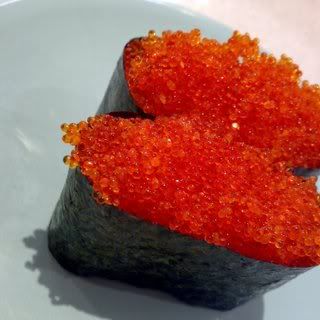
Roe (fish eggs) contain Vitamin C and E. Roe is known to treat depression and bipolar disorder due to high levels of EPA, Omega-3 and DHA (brain foods). Flying fish and other types of roe are popular in Japanese cuisine and are extremely nutritious when uncontaminated. Fish eggs (Caviar) are whole organisms, offering complete nutrition.
_______________________________________________________________
About the author
Neil McLaughlin is a computer scientist and inventor specializing in 3d graphics and simulation. He can be reached at naturalnews461 (at) yahoo (dot) com.
* Sake (Salmon) - Salmo salar (Salmonidae)

While salmon is the most popular item at sushi restaurants, it is most likely farm raised salmon. Farm raised fish such as salmon and tilapia should be avoided as the fish are raised in crowded, often contaminated waters and fed an unnatural diet. Farm raised salmon is not pink but rather a grayish brown, so they are fed artificial colors to dye their own flesh. I'm sure they would just spray paint them if they could. The finer restaurants will serve wild salmon, however in 2008 the pacific northwest of the U.S. experienced a major shortage in salmon so there is a fishing ban and effectively a moratorium on consuming wild salmon. These are also threatened with the possibility that genetically modified salmon (brought to us by caring people who only want to feed African children) will escape. It has been estimated that just a few GM fish escaping would devastate the whole wild population. It's sad what has happened to the wild salmon which is one of the healthiest fish, loaded with Omega-3 fatty acids.
* Maguro (Blue Fin Tuna) - Thunnus maccoyii (Scombridae)

While healthy tuna is one of the best sources of quality protein and Omega-3, it is hard to come by. Tuna is one of the largest fish and thus is at the top of the food chain where it accumulates higher concentrations of mercury, a dangerous heavy metal. A study in Chicago in 2006 found that 1 in 7 tuna samples had dangerously high levels. Bluefin tuna, the most popular and expensive at sushi restaurants is an endangered species. Choose Abalone instead.
* Saba (Japanese Spanish Mackerel) - Scomberomorus niphonius (Scombridae)

Due to high mercury content, mackerel should be avoided. Mackerel spoils easily and is the only salt-cured form of sushi. Mackerel contains more oil which gives it a fishier smell and taste, and for this reason it is often used as bait for other fish . Oily fish will trap more PCBs and toxins in the flesh. This is unfortunate as mackerel in its normal form was high in Omega-3 and offered extremely beneficial oils. Unless you get fish with measurable low mercury content, avoid this one.
* Tai (Red Snapper) - Lutjanus campechanus (Lutjanidae)

Snapper contains lots of B Vitamins along with Selenium, Potassium, Phosphorous and Protein, Red Snapper is normally not farm raised and contains low levels of mercury, and it is high in Omega-3. However this otherwise healthy seafood from the Gulf of Mexico is being massively over-fished.
_______________________________________________________________
Seafood To Prefer
* Hamachi (Yellowtail) - Seriola lalandi (Carangidae)

Yellowtail covers a wide range of fish, but the key is to make certain it is not farm raised. Wild yellowtail is a good choice for a fish that is sustainably harvested and that contains low mercury. A premium species is from Hawaii and called Seriola rivoliana. This is one of the healthiest fish and is among the highest in Omega-3 content. It is free from PCBs (polychlorinated biphenyls) and has no detectable mercury.
* Kani (Soft-shell Crab) - Callinectes sapidus (Portunidae)
Crab meat contains Protein, Selenium, Magnesium, Vitamin B6 and Folate. Soft-shell crabs are a great food to buy live, and since you should not purchase (or eat) dead crabs, I do not recommend eating them at any restaurant that does not purchase them alive. Crabs are normally low in mercury and high in nutrition. Though high in cholesterol, crab meat is also high in Omega-3, and low in fat.
* Ebi (Raw Sweet Shrimp) - Penaeus vannamei (Crangonidae)

Shrimp contains high levels of Protein, Omega-3, EPA and DHA. Smaller fish, like shrimp, tend to be low in mercury. If you've never tried raw shrimp you'll find it to be a completely unique experience from cooked shrimp. This expensive sushi item is often served alongside the fried shrimp carcass in tempura batter.
* Tobiko (Flying Fish Roe ) - Cheilopogon agoo (Exocoetidae)

Roe (fish eggs) contain Vitamin C and E. Roe is known to treat depression and bipolar disorder due to high levels of EPA, Omega-3 and DHA (brain foods). Flying fish and other types of roe are popular in Japanese cuisine and are extremely nutritious when uncontaminated. Fish eggs (Caviar) are whole organisms, offering complete nutrition.
_______________________________________________________________
About the author
Neil McLaughlin is a computer scientist and inventor specializing in 3d graphics and simulation. He can be reached at naturalnews461 (at) yahoo (dot) com.
// posted by Daisy Lo @ 9:18 PM 

Subscribe to Posts [Atom]